7 min read

The Monday Morning Quarterback: What Insurance Executives Can Learn from the Post-Super Bowl Blame Game

The Monday Morning Quarterback: What Insurance Executives Can Learn from the Post-Super Bowl Blame Game

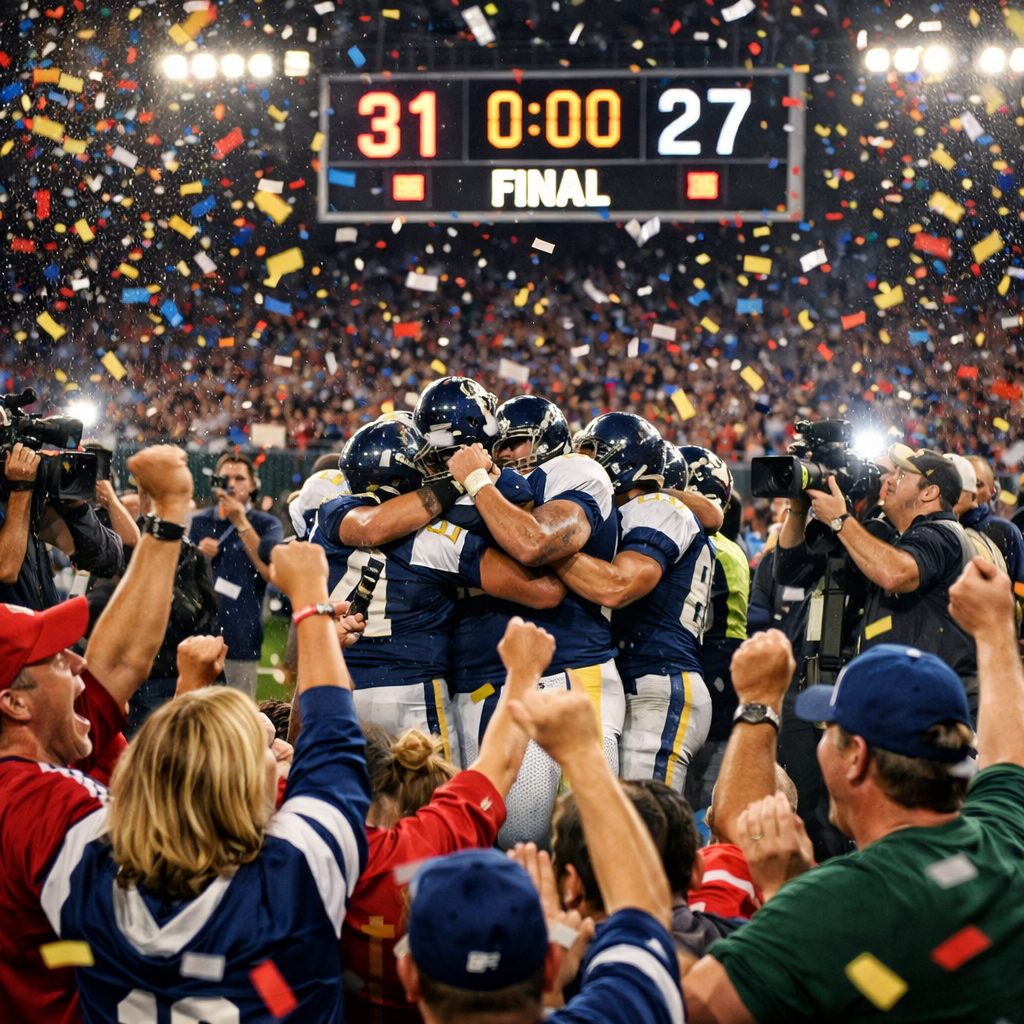
The confetti has barely settled, and already the takes are flying.

The quarterback held the ball too long. The defensive back blew his coverage assignments. The head coach should have challenged that call in the third quarter. The offensive line couldn't protect. The front office made the wrong offseason moves. Everyone has an opinion. Everyone has someone to blame.

This is the post-Super Bowl ritual in American sports culture. The winning team celebrates. The losing team absorbs an avalanche of criticism from fans, analysts, and commentators who watched the game from their couches, confident they would have called it differently.

But the most important post-Super Bowl conversations don't happen on television. They happen in film rooms, in coaches' offices, and in the quiet moments when a team that just won a championship sits down and asks a question that most people never think to ask: What did we almost get wrong?

Insurance organizations should be doing exactly the same thing, and yetmost of them still aren't. In fact, it's for this reason that insurance companies and MGAs seek operations solutions, and why I reached out to Pete Crowe, President of FOCUS, a leading insurance operations partner and BPO provider, to gather insights into what he sees when companies come to FOCUS to stabilize operations.

The Blame Game Solves Nothing

When a claim goes badly, the instinct is identical to sports media after a big loss. Somebody gets blamed.

  • The TPA missed the deadline.
  • Defense counsel recommended the wrong strategy.
  • The adjuster underreserved the file for six months.
  • The carrier didn't clearly communicate its settlement authority.

Everyone points at someone else, a few process memos get written, and the organization moves forward, assuming the problem has been addressed.

It hasn't. It's been documented and filed.

"We see this pattern constantly when organizations come to us. They've had a significant claims failure, someone got blamed, a memo was written, and they're genuinely surprised when the same problem surfaces six months later under a different file number. Documentation without structural change is just organized regret, said Pete Crowe."

Real improvement doesn't come from identifying who dropped the ball. It comes from understanding why the ball was dropped in the first place, and building systems that make it harder to drop the next one. That requires a genuine post-mortem, not a blame session dressed up in professional language.

The same coaches who won championships this week have lost games they should have won. The best ones didn't fire their coordinators and call it resolved. They watched film. They asked hard questions. They rebuilt what wasn't working while protecting what was.

Insurance organizations that want to consistently deliver for policyholders must develop the same discipline.

Every Eliminated Team Carries a Lesson

Here's what gets overlooked in the post-Super Bowl noise: the teams that lost in the Wild Card round have something valuable to teach the teams that made it to February. So do the teams that made it to the conference championship and came up short. So, frankly, does the team that won the whole thing.

Each elimination carries a lesson. Each close game reveals a gap. Each unexpected loss exposes an assumption that proved false.

In claims management, the equivalent happens every single day. A claim settles for twice the initial reserve. A plaintiff's attorney exploits a communication gap that the carrier didn't know existed. A coverage dispute escalates into litigation because no one caught the reservation-of-rights issue early enough. A TPA relationship that worked perfectly in one state produces inconsistent results when the carrier expands into another.

These aren't isolated failures. It’s information. And information only creates value when someone is organized enough to capture it, honest enough to analyze it without defensiveness, and disciplined enough to actually change something as a result.

The organizations that treat every resolved claim, good or bad, as a learning opportunity compound their expertise over time. Organizations that close files and move forward without reflection keep repeating the same mistakes under different case numbers.

"The most expensive mistakes we help clients fix aren't the dramatic ones - they're the ordinary failures that compounded quietly over years because nobody ever stopped to ask why they kept happening. Not only are we an extension of an insurer’s team, but we’re also guiding them on building a strong operational infrastructure that allows for smoother, faster, and quality growth," Pete Crowe continued.

What a Real Post-Mortem Looks Like

The best sports franchises have sophisticated systems for turning game film into a competitive advantage. They certainly watch what went wrong, but they also study what went right, understanding why it worked, and figuring out how to make it repeatable.

A genuine claims post-mortem operates the same way. It's an honest examination of process, communication, and decision-making at every stage of the claim lifecycle.

The questions worth asking aren't comfortable ones:

  • At what point did communication break down between the TPA and the carrier, and why did neither party flag it?
  • Where did the reserve reflect hope rather than honest assessment, and what information was available that should have changed that number earlier?
  • Which decisions got made because they were genuinely right for the file, and which got made because they were expedient given the resources available?
  • What did the insured experience during this process, and how does that match what we'd want them to experience?

And the questions that rarely get asked at all:

  • Where did we get lucky?
  • What went right that we can't fully explain?
  • Which outcomes were good because of our process, and which were good despite it?

That last set of questions matters enormously.

“Organizations that don't understand their own accidental successes tend to repeat the conditions that produced them without understanding which elements were actually essential,” said Pete Crowe, President, FOCUS

Victory Has Lessons Too

The post-Super Bowl winner will spend the next several months in the spotlight. Parades, endorsements, tribute videos. And somewhere in all of that, the real work of understanding what they actually did well enough to repeat will either happen or it won't.

Teams that win back-to-back championships stay honest about what they do well and why. Everyone else? They assume the formula is locked in and then wonder why it doesn't work the following season when the personnel change and the competition adjusts.

Insurance organizations face the same dynamic after successful claims. When a complex litigation matter resolves favorably, when a large loss comes in under reserve, when a new market launch produces better claims results than projected, the instinct is to move on and let the wins speak for themselves.

And this is important: a favorable outcome on a complex claim that was poorly managed is a warning disguised as a victory. It actually means the organization got lucky, this time. Without understanding what worked and why, they have no foundation for repeating it.

The carriers and MGAs that consistently deliver for policyholders are the ones who study their wins as carefully as their losses. They understand which TPA relationships produced strong results and invest in deepening them. They identify which defense strategies generate value and incorporate them into their litigation management guidelines. They identify the adjusters who catch problems early and assign them to the hardest files.

This isn't bureaucracy. It's institutional knowledge being built deliberately instead of accidentally.

"When we do an operational assessment, we always ask carriers and MGAs to show us their wins, not just their problem files. Nine times out of ten, they can tell you exactly why something went wrong. They struggle to articulate with the same precision why something went right. That asymmetry is where much of the performance is left on the table. In this moment, clients see us a a real strategic partner. Every company should be asking this question every quarter,” said Pete Crowe.

The Policyholders Are Watching

Here's where the sports analogy starts to break down, and it's worth being honest about it.

When a football team has a bad season, the worst outcome is a disappointed fan base. When an insurance organization fails to learn from its claims process failures, real people absorb that cost. Policyholders who purchased coverage expecting protection face delays, disputes, and outcomes that don't match what they were promised. The financial and emotional impact of a claims process that fails at critical moments is not abstract.

The obligation to improve is beyond competitive; it’s ethical.

“I think sometimes the industry loses sight of what's actually at stake in these processes. A policyholder who bought coverage is counting on you during one of the worst moments of their life. That's not an operational metric. This is the promise, and the only way to keep it consistently is to build operations that actually learn. It’s an intentionally designed and finely tuned operations learning model,” Crowe added.

The organizations that build genuine post-mortem cultures, review resolved claims honestly about what worked and what didn't, and use those insights to improve communication protocols, TPA relationships, litigation strategies, and escalation processes are the ones that consistently improve their delivery on their core promise to policyholders.

The Monday morning quarterback on television is performing. He's generating content, not solutions.

The Monday morning quarterback in the film room is building something. He's using the pain of last week's loss to prevent next week's. He's using the clarity that comes after the game is over to see things he couldn't see while he was in it.

Insurance organizations have that opportunity after every single claim. The question is whether they're using it.

The Off-Season Starts Now

Champions aren’t waiting around until training camp before they start preparing for the next season. The off-season is when the real work happens. Film study. Draft preparation. Coaching adjustments. Personnel decisions. All of it informed by an honest assessment of what the previous season revealed.

For insurance organizations, the equivalent work occurs during the quiet periods between major claims events, in the operational reviews that no one outside the company sees, and in the decisions about which vendors to trust with the most complex files and which processes to rebuild from the ground up.

The Super Bowl just ended. The celebration or the disappointment will fade quickly. What lasts is what the teams do next.

The same is true for every claim that just closed.

What did you learn? What are you going to do differently? And are you building the kind of operation that consistently gets better at delivering for the policyholders who are counting on you?

That's not a Monday morning question. It's the only question worth asking.

“The organizations that come to us having already asked hard questions about their operations are always easier to help. They've done the film study. They know where the gaps are. Our job is to help them build what's missing. The ones who come to us thinking the problem is a single bad vendor or a single bad quarter? Those are much longer conversations," said Pete Crowe.

About Pete Crowe

Pete Crowe is President of FOCUS, a leading insurance operations partner and BPO provider serving carriers, MGAs, and specialty program businesses. With deep experience in claims operations, vendor management, and organizational performance, FOCUS helps insurance organizations build the systems and partnerships they need to consistently deliver for policyholders. Pete and his team of experienced insurance leaders and former carrier executives work directly with executive teams at insurers and MGAs to diagnose operational gaps and design solutions that scale.


Build Your Financial Dream Team - The Get Ready Money Podcast

2 min read

Build Your Financial Dream Team - The Get Ready Money Podcast

On this episode of The Get Ready Money Podcast, I spoke with Alissa Maizes, Julie Pinkerton and Maxwell Schmitz about building your financial dream...

Read More
The Evolution of Wildfire Modeling: From DOS to Geospatial Simulation and Implications

1 min read

The Evolution of Wildfire Modeling: From DOS to Geospatial Simulation and Implications

Wildfire modeling has come a long way. Joe Scott, Chief Fire Scientist of Vibrant Planet and Founder of Pyrologix talks about his early days in fire...

Read More
Mastering Communication with Improv Principles from Katherine Pomerantz, Rhianna Basore, & Joe Saul-Sehy on The Get Ready Money Podcast.

2 min read

Mastering Communication with Improv Principles from Katherine Pomerantz, Rhianna Basore, & Joe Saul-Sehy on The Get Ready Money Podcast.

On this episode of The Get Ready Money Podcast, I spoke with Katherine Pomerantz, Rhianna Basore, and Joe Saul-Sehy about how the principles of...

Read More