
3 min read

The Shift from Underwriting Judgment to Routing Logic in Insurance

The Shift from Underwriting Judgment to Routing Logic in Insurance

Program underwriting, particularly within Managing General Agents (MGAs) and wholesale insurance operations, a subtle but profound shift is occurring.

Underwriting judgment, the core discipline assessing whether a risk should be accepted, has quietly ceded ground to routing logic, where the primary focus becomes identifying which carrier will accept a risk rather than whether the risk is appropriate to write. This transition happens incrementally and often goes unnoticed until its cumulative impact surfaces in portfolio performance and carrier relationships.

This phenomenon is especially relevant for insurance professionals operating in multi-carrier, multi-capacity frameworks. While the addition of carriers creates valuable optionality and growth opportunities, it also reshapes underwriting behavior, incentives, and ultimately risk selection criteria. Understanding this dynamic is critical for underwriters, agents, and insurance leaders seeking to preserve underwriting integrity while scaling operations.

Key Insights

  • From Risk Evaluation to Risk Placement
    Initially, underwriters assess a risk based on a single carrier’s appetite and guidelines, making a clear decision to accept, decline, or adjust terms. Introducing multiple carriers shifts this focus to “where” a risk should be placed. Over time, this routing question overtakes the fundamental “should we write this risk?” consideration. The underwriting process becomes about matching risk profiles to carrier appetites rather than filtering out unprofitable or misaligned risks.
  • Optionality Alters Underwriting Behavior and Incentives
    Multiple carrier options create an environment where marginal or borderline risks, which previously might have been declined, are now viewed as puzzles to solve. This shift is rational and efficiency-driven but changes the underwriting mindset from cautious risk selection toward maximizing placement and growth. Production metrics and broker demands further incentivize routing over judgment.
  • Erosion of a Unified Risk Thesis and Appetite
    With routing-dominant underwriting, the MGA’s or wholesale’s original risk appetite becomes fragmented or diluted. The effective appetite becomes the aggregate of all carrier appetites rather than a coherent, MGA-defined risk philosophy. This undermines the strategic consistency of the portfolio and complicates risk management oversight.
  • Underwriting Expertise Transforms and Risks Eroding
    Expertise evolves from evaluating risk quality to mastering carrier-specific appetites, exceptions, and submission positioning. While valuable, this skill set emphasizes placement efficiency over critical risk judgment. Over time, the ability to independently assess whether a risk aligns with a sound underwriting philosophy diminishes.
  • Fragmentation and Inconsistency in Decision-Making
    As underwriters internalize different interpretations of appetite based on experience with various carriers, organizational coherence erodes. Individual decisions remain defensible locally but contribute to systemic drift. This can lead to challenges in explaining portfolio performance and aligning underwriting strategy across teams.

Insurance Industry Applications

  • MGA and Wholesale Underwriting Strategy
    Insurance professionals managing multi-carrier relationships should consciously maintain a clearly articulated MGA-level risk appetite and risk thesis. This requires leadership to regularly reaffirm and communicate strategic underwriting principles that transcend individual carrier appetites, ensuring portfolio coherence.
  • Training and Development for Underwriters
    Underwriting training programs should balance carrier-specific routing knowledge with robust risk evaluation skills. Empowering underwriters to challenge marginal risks based on sound judgment, not just placement feasibility, will help preserve underwriting discipline as organizations scale.
  • Performance Metrics and Incentives
    Shift performance measurement beyond volume and placement rates to include quality indicators such as loss ratios relative to targeted risk profiles. Recognizing and rewarding sound judgment, including prudent declinations, encourages a culture that values underwriting integrity alongside growth.
  • Broker Relationship Management
    Brokers often push for multiple market submissions to “find a home.” Insurance professionals should establish clear communication protocols that emphasize MGA appetite boundaries and manage broker expectations proactively, preventing pressure from undermining underwriting discipline.
  • Portfolio Monitoring and Analytics
    Implement analytics that track portfolio composition relative to the MGA’s intended risk thesis rather than only carrier-level acceptance criteria. Early detection of portfolio drift enables timely management intervention before loss ratios deteriorate or carrier relationships strain.

Conclusion and Recommendations

The transition from underwriting judgment to routing logic in multi-carrier environments is a natural consequence of scaling but carries significant risks for portfolio quality and organizational coherence. Insurance professionals must recognize this shift proactively rather than reactively to emerging performance issues. Maintaining a disciplined risk thesis, reinforcing underwriting judgment, and aligning incentives with quality outcomes are critical steps for sustaining underwriting excellence.

Leaders in MGAs and wholesale operations should implement governance structures that preserve the primacy of risk evaluation, even as routing expertise remains essential for efficient placement. By balancing these dual competencies, insurance organizations can leverage multi-capacity growth opportunities without compromising underwriting integrity.

Original Source: https://faroeio.substack.com/p/when-underwriting-judgment-quietly

Risks Emerge and Competition Increases in Underwriting Markets Where Stakes are High

4 min read

Risks Emerge and Competition Increases in Underwriting Markets Where Stakes are High  

Risks Emerge and Competition Increases in Underwriting Markets Where Stakes are High by Larry Nicholson Complex challenges, emerging risks,...


Read More
Hey #Insurance – Ep 116 – I don’t feel like an underwriter…

1 min read

Hey #Insurance​ – Ep 116 – I don’t feel like an underwriter…

Hey #Insurance – Ep 116 – I don’t feel like an underwriter… by Antonio Canas We have call centerized some “underwriting” roles so much,...
Read More
From Reactive to Proactive: How Integrated AI Redefines Underwriting Efficiency

2 min read

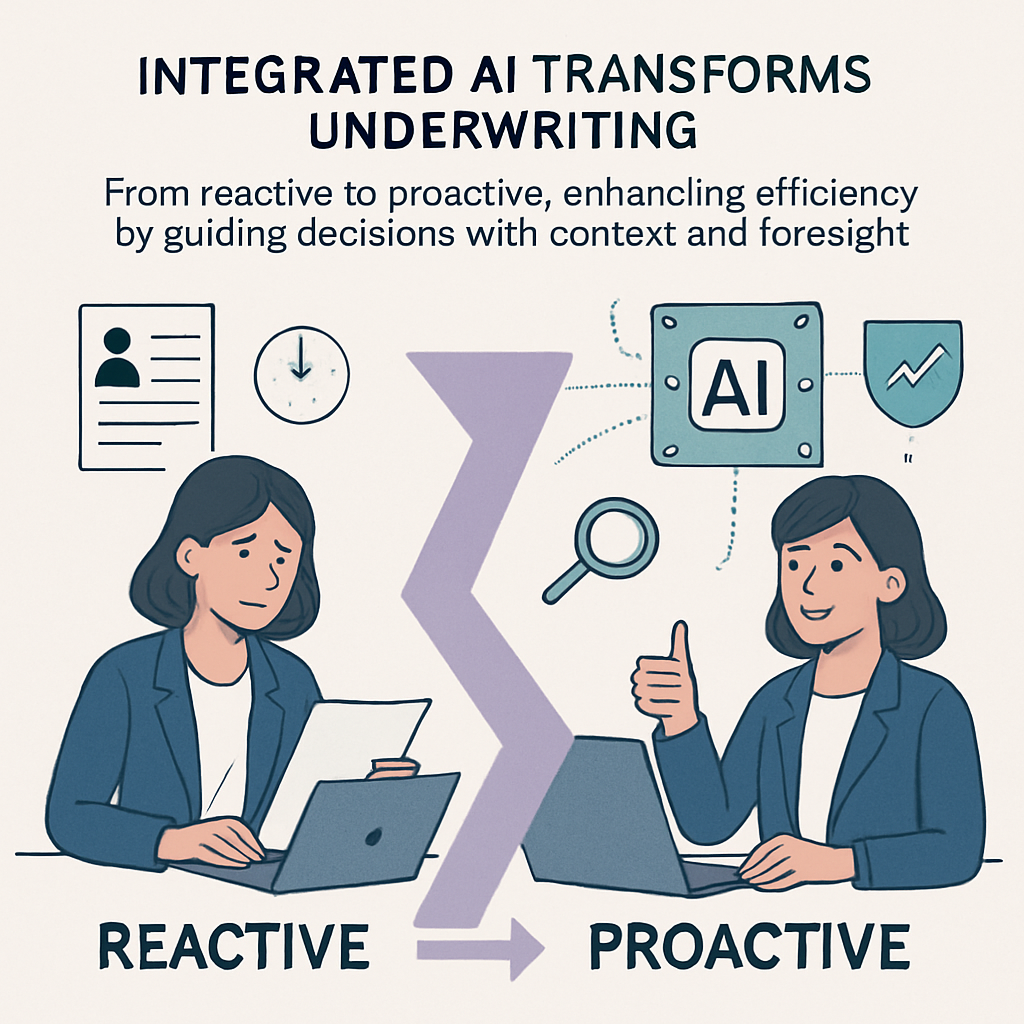
From Reactive to Proactive: How Integrated AI Redefines Underwriting Efficiency

Efficiency Isn’t Just About Speed Underwriting has always been about making decisions under pressure. Faster quotes. Quicker responses to brokers....

Read More