
2 min read

Claims AI Is About to Hit Its First Major Test

Claims AI Is About to Hit Its First Major Test

The insurance industry is rushing toward full automation of simple claims just as catastrophic losses are making human judgment more valuable than ever.

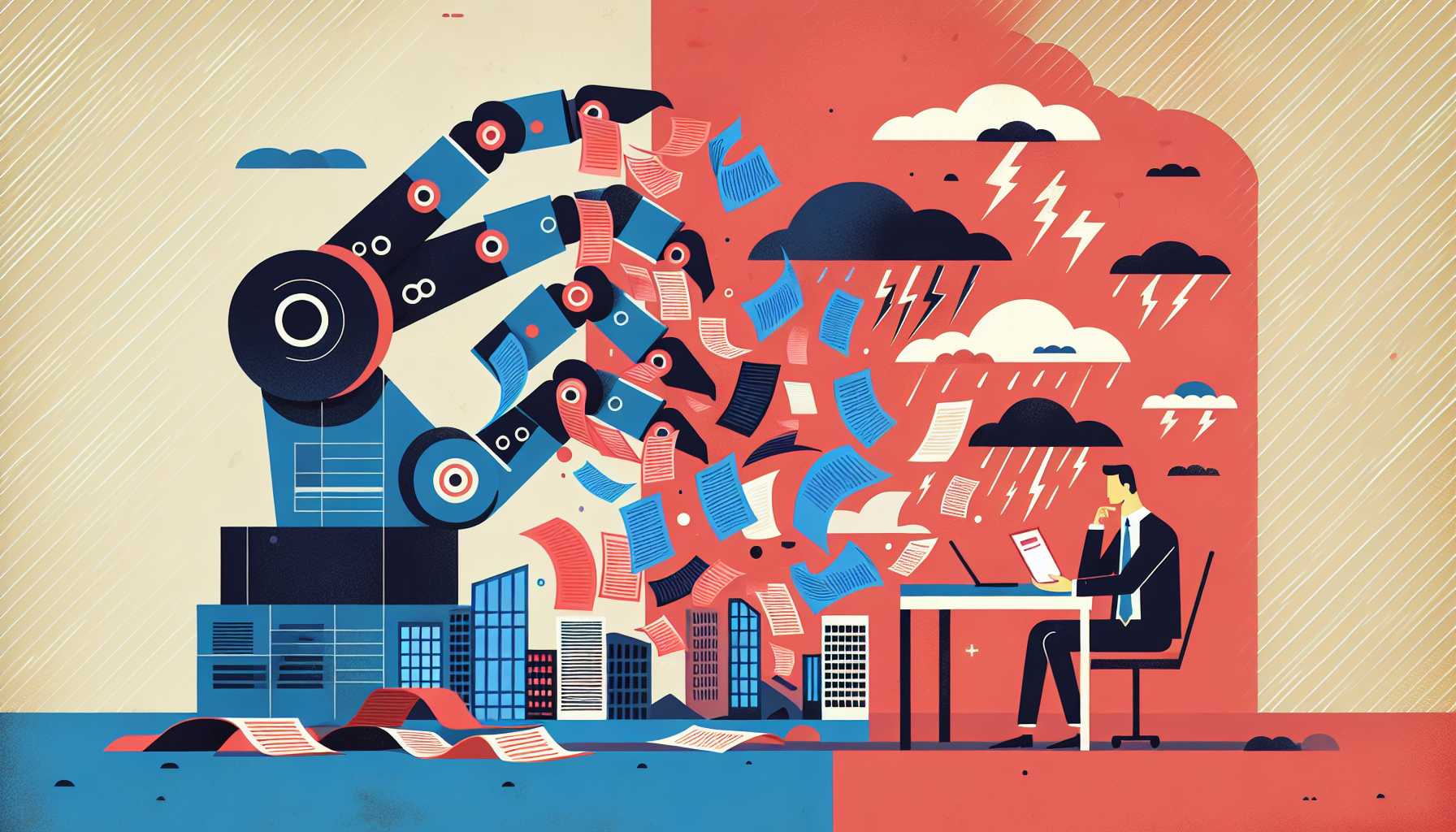
Crawford & Company's new forecast highlights a critical tension brewing in claims departments across the industry. While carriers push toward complete automation of low-complexity claims, the reality of increasingly severe disasters is demanding exactly the opposite: more nuanced, empathetic human intervention.

The push for straight-through processing makes financial sense on paper. Sedgwick reports that AI-driven claims handling delivers 80% faster processing times for some carriers. When you're dealing with thousands of routine fender-benders or minor property damage claims, automation can dramatically reduce costs and improve cycle times.

But the timing creates a strategic contradiction. Crawford's report also predicts that 2026 will bring more severe natural disasters requiring proactive industry response. The Los Angeles wildfires of January 2025 already forced rapid regulatory changes and carrier pullbacks from California markets. These complex, emotionally charged situations require exactly the human skills that straight-through processing eliminates.

The Empathy Gap in Automated Claims

Consider what happens when automation meets catastrophe. A homeowner whose house burned down doesn't want to interact with a bot that calculates linear feet of destroyed fencing. They need someone who understands that behind every claim number is a family dealing with displacement, loss, and uncertainty.

Gregg Golson from Up2Now LLC captures the core problem: AI can process claims data efficiently, but it cannot read between the lines when a claimant is struggling to articulate their loss or needs help navigating complex coverage questions.

This limitation becomes acute during major disasters when claims volume spikes and emotional stakes run highest. Carriers that have automated too much of their claims process may find themselves poorly positioned to handle the human-intensive work that catastrophic events demand.

The Training Mismatch

Crawford's forecast calls for adjuster training to shift toward "AI literacy, interpretability and judgment." But this approach treats AI as a tool rather than recognizing it as a fundamental reshaping of the adjuster role.

The real training challenge isn't teaching adjusters to work with AI. It's preparing them to handle the increasingly complex, high-touch claims that AI cannot process while maintaining the investigative and empathy skills that automation threatens to atrophy.

Smart carriers should be developing dual-track capabilities: robust automation for routine claims paired with enhanced human expertise for complex situations. This means investing in adjuster training that emphasizes emotional intelligence, complex problem-solving, and disaster response skills alongside technical competencies.

A Strategic Recommendation

Rather than rushing toward full automation, carriers should view 2026 as a year to build intelligent claim triage systems. Use AI to identify which claims truly require human intervention and which can be processed automatically. Then invest heavily in making your human adjusters exceptional at handling the complex, high-stakes situations that machines cannot manage.

The carriers that master this balance will capture the efficiency gains of automation while maintaining the human capabilities that matter most when the stakes are highest.

*This article was inspired by and builds on: Nine Claims Trends to Watch Through the Rest of 2026, Carrier Management. Read the original for full details.*


*Source: Carrier Management | Tags: carriers, insurtech, strategy*

The Attachment Point News Roundtable | Juniper Labs

1 min read

The Attachment Point News Roundtable | Juniper Labs

The Attachment Point News Roundtable | Juniper Labs by Brett Fulmer In this episode of The Attachment Point News Roundtable, Nick Lamparelli...

Read More
Profiles in Risk – E125: Juliette Murphy, Co-founder & CEO of FloodMapp

2 min read

Profiles in Risk – E125: Juliette Murphy, Co-founder & CEO of FloodMapp

Profiles in Risk – E125: Juliette Murphy, Co-founder & CEO of FloodMapp by Nicholas Lamparelli In this episode of Profiles in Risk, I discussed...

Read More
Back to (Claims) School

2 min read

Back to (Claims) School

Back to (Claims) School by John Bachmann As the holiday break was winding down, and I was getting ready to send my kids back to school, it...

Read More