3 min read

Maximizing AI-Driven Learning in the Insurance Industry

Maximizing AI-Driven Learning in the Insurance Industry

Executive Summary

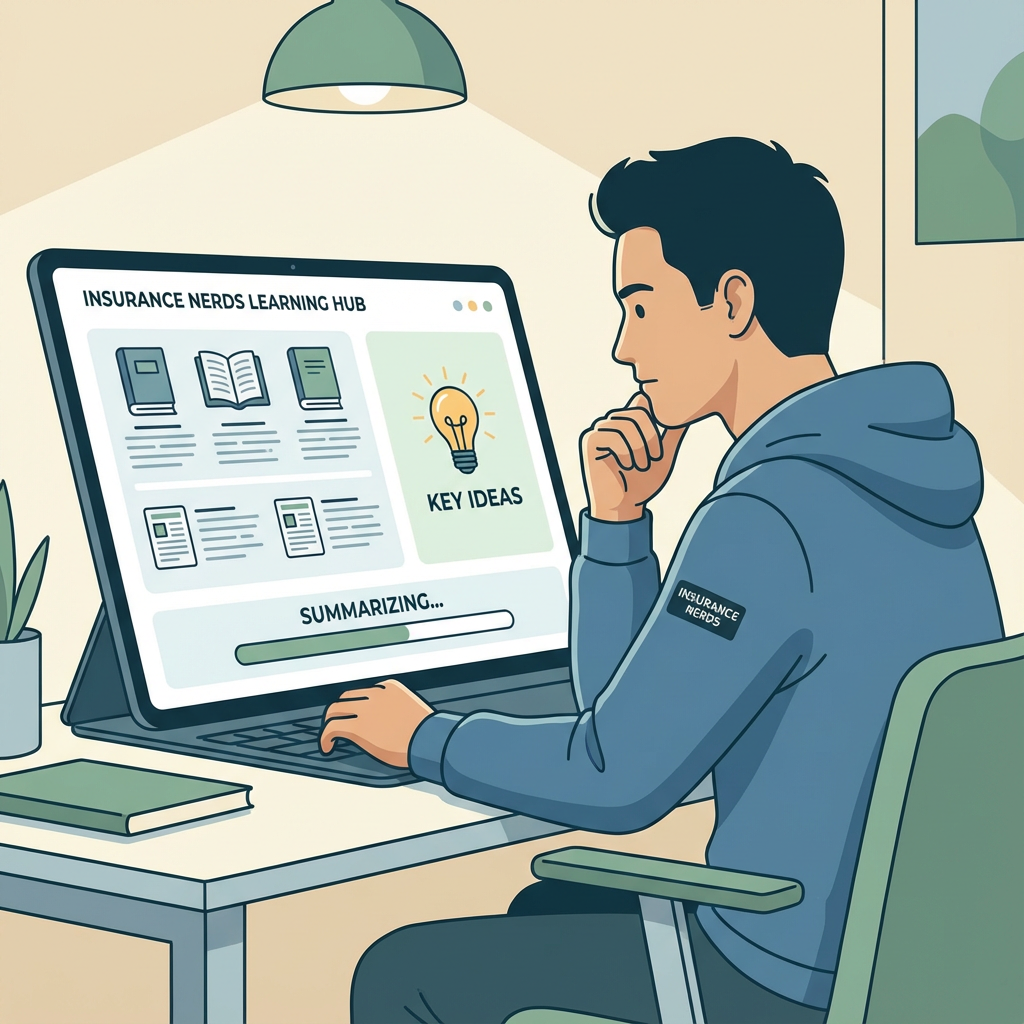
The rapid advancement of large language models (LLMs) has transformed access to information, making it easier than ever to explore complex topics across industries. However, as Nir Zicherman, CEO and cofounder of AI learning platform Oboe, highlights in a recent discussion with Dan Shipper, the sheer availability of AI-generated content does not guarantee meaningful learning. Zicherman argues that while LLMs excel at providing answers, they often lack the ability to recognize learner engagement levels or adapt dynamically to maintain motivation. This insight holds particular relevance for insurance professionals who seek to integrate AI-driven educational tools for internal training or client education.

Insurance companies, agents, and underwriters operate in a complex regulatory and product environment that demands continuous learning. To truly benefit from AI-powered learning solutions, the industry must move beyond viewing AI as a simple repository of information. Instead, it should adopt platforms that incorporate adaptive learning techniques, multimodal content delivery, and personalized engagement strategies. This approach can help overcome common hurdles such as learner fatigue, information overload, and the challenge of translating knowledge into practical application.

Key Insights

  • AI Learning Requires More Than Access to Information
    Zicherman emphasizes that the mere ability to query an LLM is insufficient for deep understanding. Unlike traditional classroom settings where instructors guide pacing and content structure, general-purpose LLMs place the burden on learners to define objectives and maintain momentum. For insurance professionals, this means that AI tools must be designed to scaffold learning journeys, not just provide data on demand.
  • Engagement and Motivation Are Critical Factors
    One of the central challenges Zicherman identifies is the failure of AI agents to detect when a learner’s motivation is waning and re-engage them proactively. In insurance training, where complex subjects like underwriting standards or compliance can be daunting, AI platforms should incorporate mechanisms such as reminders, progress checks, and adaptive quizzes to sustain learner interest.
  • Multimodality Enhances Comprehension
    Effective learning often involves multiple formats—text, visuals, audio, and interactive components. Zicherman’s Oboe platform adapts content presentation based on the topic, recognizing that some subjects benefit from more graphics while others rely on narrative or audio formats. Insurance education programs can similarly leverage multimodal content to address varied learning preferences among agents and clients, from explainer videos on policy features to podcasts discussing emerging risks.
  • Chunking Content into Achievable Milestones
    Breaking down material into manageable, achievable segments helps reduce intimidation and encourages steady progress. Embedded quizzes and milestone checks reinforce retention and provide feedback loops. This principle is especially applicable in insurance, where regulatory updates, product details, or risk management concepts can be overwhelming if presented all at once.
  • The Need for Autonomous AI Agents in Learning
    Zicherman notes that current AI lacks the autonomy to adjust its teaching strategy without user prompts. For insurance firms, this underscores the importance of developing or adopting AI tools that can independently adapt to learner feedback, modifying course structure or difficulty in real time to optimize outcomes.

Insurance Industry Applications

  • Training and Development for Underwriters and Agents
    Insurance companies can deploy AI-driven learning platforms that guide employees through tailored curricula on underwriting guidelines, claims processing, and regulatory compliance. Adaptive AI can identify knowledge gaps and adjust content delivery, helping underwriters make more informed decisions and agents stay current with product offerings.
  • Client Education and Engagement
    Insurers increasingly seek to empower customers with knowledge about coverage options and risk mitigation. AI-powered educational tools can deliver personalized learning experiences, using multimodal content such as interactive policy walkthroughs, explanatory videos, and targeted quizzes that clarify complex coverage terms. This approach can improve client satisfaction and reduce misunderstandings that lead to disputes.
  • Risk Assessment and Continuous Learning
    Underwriters and risk managers can leverage AI tools that continuously update training materials based on emerging risks like cyber threats or climate change. By embedding learning milestones and engagement prompts, these platforms help professionals stay agile in a rapidly evolving risk landscape.
  • Compliance Training with Real-Time Feedback
    Insurance regulations change frequently, and compliance is critical. AI-based platforms can provide modular training with embedded assessments, ensuring that personnel not only consume content but also demonstrate understanding. The system’s ability to prompt re-engagement when learners falter can reduce compliance risks.

Conclusion and Recommendations

The insights shared by Nir Zicherman illuminate crucial gaps in current AI learning models that insurance professionals must address to fully realize AI’s potential in training and education. Simply providing information via LLMs is not enough; platforms need to actively guide learners, recognize engagement levels, and adapt content delivery to individual needs.

Insurance organizations should invest in or partner with AI learning solutions that incorporate multimodal content, break material into digestible milestones, and include mechanisms for ongoing motivation and feedback. Furthermore, developing AI agents with greater autonomy to reassess and adjust learning pathways will be vital to sustaining long-term knowledge retention and application.

By embracing these principles, insurance companies can enhance workforce capability, improve client understanding, and maintain compliance more effectively in an increasingly complex environment.

For a deeper exploration of these concepts, insurance professionals are encouraged to listen to the full discussion with Nir Zicherman at https://every.to/podcast/why-your-ai-learning-projects-keep-fizzling-out?ph_email=nick%40insnerds.com.

Original Source: https://every.to/podcast/why-your-ai-learning-projects-keep-fizzling-out?ph_email=nick%40insnerds.com

Navigating New AI Companion Laws - Implications for Insurance Organizations

2 min read

Navigating New AI Companion Laws - Implications for Insurance Organizations

As insurance organizations eagerly adopt artificial intelligence (AI) technologies, recent regulatory developments in states like New York and...


Read More
Enforcing Financial Integrity – The Importance of Separation of Duties

3 min read

Enforcing Financial Integrity – The Importance of Separation of Duties

Enforcing Financial Integrity – The Importance of Separation of Duties by Crystal Temple Financial management is difficult enough in the...

Read More
Integrating AI in Insurance: Lessons from Academia's AI Backlash

3 min read

Integrating AI in Insurance: Lessons from Academia's AI Backlash

Executive Summary As artificial intelligence becomes an integral part of professional workflows in 2026 and beyond, the insurance industry faces a...

Read More