2 min read

Why Strategic Plans Often Fail in Insurance and How to Build Plans That Deliver Results

Why Strategic Plans Often Fail in Insurance and How to Build Plans That Deliver Results

Executive Summary

Strategic planning remains a cornerstone activity for insurance organizations seeking to navigate an increasingly complex market landscape. Yet, as highlighted in a recent Fast Company article, most strategic plans fail to achieve their intended outcomes despite significant investments of time and resources. The primary reason is a disproportionate emphasis on high-level strategy without sufficient focus on tactical execution and resource alignment. Insurance firms often find themselves with inspiring strategic goals but without clear, actionable steps or an understanding of the operational changes necessary to realize them.

For insurance professionals, from executives to underwriters and agents, the lesson is clear: successful strategic planning requires integrating tactical planning early, allocating appropriate resources, and continuously adapting based on real-world feedback. This approach ensures that strategic objectives translate into practical actions that drive measurable progress, rather than remaining aspirational statements. The insights from Fast Company’s analysis provide a valuable framework for insurance companies aiming to elevate their strategic planning processes from theory to impactful practice.

Key Insights

  • Strategy Without Tactics Is Doomed to Fail A strategic plan defines the destination but does not guarantee arrival without a tactical roadmap. Insurance companies must delineate specific, time-bound activities, such as underwriting guideline revisions, claims process improvements, or agent training programs, that operationalize strategic goals. Without this, plans become abstract and lack accountability.
  • Resource Allocation Must Be Front and Center Implementing new initiatives in insurance, whether launching new product lines or adopting digital tools, demands upfront identification of necessary human, financial, and technological resources. Plans that underestimate these requirements often stall as teams are stretched too thin or budgets are insufficient.
  • Aligning Current Workflows with Future Goals Is Critical Insurance professionals juggle numerous responsibilities daily. Strategic shifts require a clear understanding of existing workflows to integrate new priorities without overburdening staff. This may include redistributing tasks among teams or streamlining legacy processes to free capacity for strategic initiatives.
  • Incentive Structures Drive Behavior Change Employees in insurance respond most strongly to what is rewarded. If strategic plans call for enhanced customer engagement or compliance adherence, corresponding incentive and performance measurement systems must be updated to reinforce these behaviors.
  • Continuous Iteration Increases Success Rates Strategic plans should be treated as evolving frameworks rather than static documents. Insurance organizations benefit from a cycle of testing, measuring outcomes, and refining tactics to adapt to emerging risks, regulatory changes, or market dynamics.

Insurance Industry Applications

  • Product Development and Launch When introducing innovative insurance products, companies should move beyond strategic intent to detailed rollout plans. This includes assigning responsibilities to underwriting, marketing, and claims teams, budgeting for training and technology platforms, and setting KPIs to monitor adoption and performance.
  • Digital Transformation Initiatives Many insurers invest heavily in digital tools to enhance customer experience and operational efficiency. Success depends on tactical plans that map out specific technology deployments, staff training schedules, process reengineering, and phased implementation, with resource commitments clearly defined.
  • Regulatory Compliance Programs As regulatory landscapes shift, insurance firms must translate compliance strategies into daily operational practices. This involves identifying compliance tasks within underwriting and claims workflows, investing in compliance training, and adjusting reward structures to prioritize adherence.
  • Agent and Broker Engagement Strategic goals to deepen agent relationships or expand distribution channels require tactical support such as targeted communication plans, incentive realignment, and workload assessments ensuring agents can dedicate time to new initiatives without compromising existing commitments.
  • Risk Management Enhancements Efforts to improve risk assessment accuracy or claims fraud detection should include tactical protocols, resource allocation for data analytics teams, and iterative feedback loops to refine models based on outcomes.

Conclusion and Recommendations

For insurance professionals, the challenge of turning strategic plans into reality is substantial but surmountable. Begin by balancing strategy formulation with detailed tactical planning, ensuring that every strategic objective has concrete steps backed by adequate resources. Evaluate current workflows to integrate new initiatives seamlessly and revise incentive frameworks to align staff behavior with desired outcomes. Finally, embrace an iterative approach that allows continuous learning and adaptation.

By applying these principles, insurance companies can reduce the cynicism surrounding strategic planning and increase the likelihood that their strategies deliver meaningful business results. As the Fast Company article underscores, success depends less on grand visions and more on disciplined execution and ongoing refinement.

Original Source: https://www.fastcompany.com/91469099/why-most-strategic-plans-fail

```
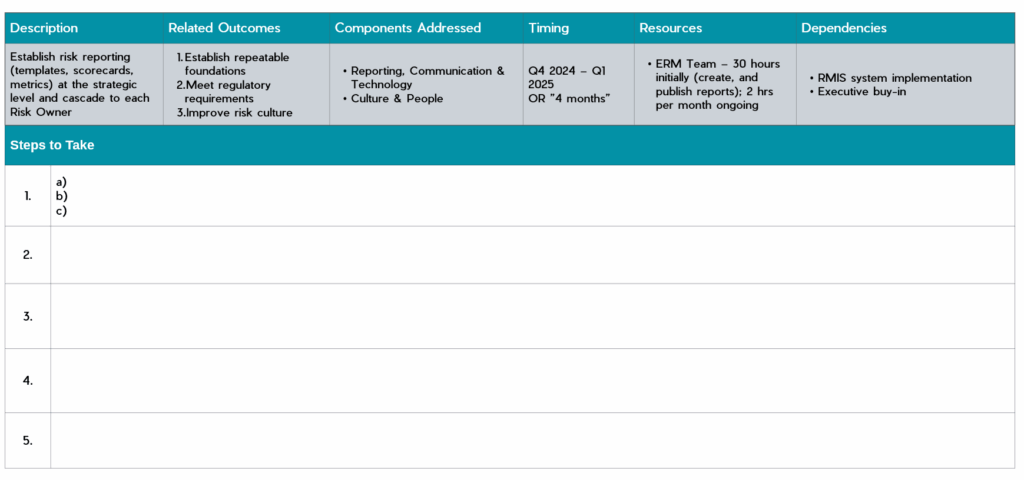
How to Develop an Action Plan for Risks & Objectives

4 min read

How to Develop an Action Plan for Risks & Objectives

This guest article first appeared HERE Are you or someone you know the type of person who likes to say ‘yes’ to most invitations or requests? For...

Read More
The Myth of the Underwriting “Secret Sauce”: Why Process Isn’t the Right Differentiator

3 min read

The Myth of the Underwriting “Secret Sauce”: Why Process Isn’t the Right Differentiator

Underwriting is often treated as sacred ground—the “secret sauce” that must stay entirely in-house. But, what actually differentiates an insurer is...

Read More
Claims is the Place to Be

2 min read

Claims is the Place to Be

Claims is the Place to Be by John Bachmann It’s what an insurance company is selling. So why wouldn’t it be most important component of an

Read More