2 min read
New Talent Models for MGA Success: Navigating Growth Challenges
The rapid growth of Managing General Agents (MGAs) is currently facing a significant, yet frequently ignored, hurdle: a deficit of seasoned...
2 min read
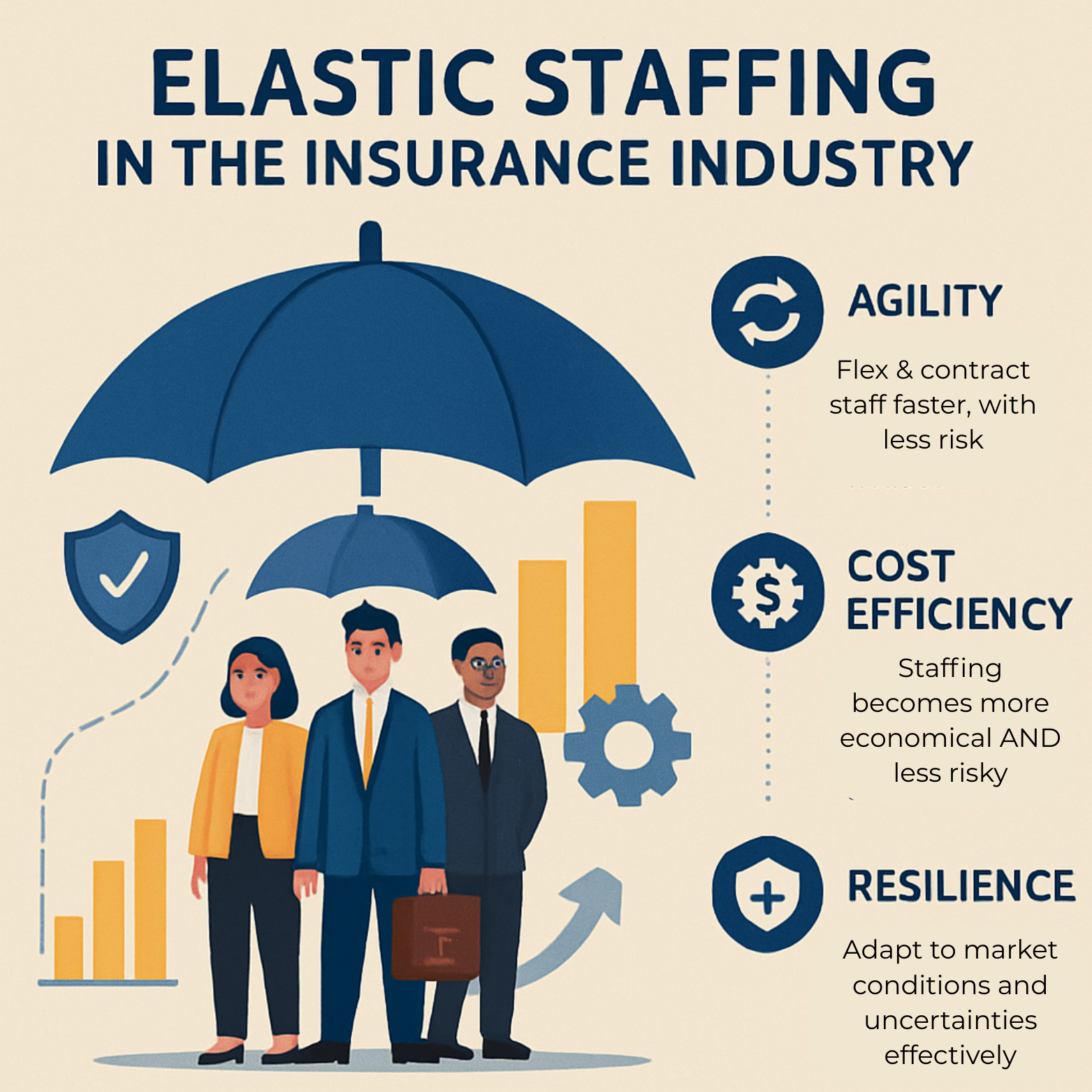
Traditional staffing models are increasingly misaligned with market realities.
The convergence of more frequent catastrophic events, escalating operational costs, evolving customer expectations, and a workforce simultaneously aging and lacking critical digital skills has created an unrelenting challenge for insurance organizations. To navigate this environment successfully, insurers must adopt more flexible approaches to talent management and operational structure that leverages third-party partnerships and a heavy dose of technology.
The insurance industry faces a perfect storm of workforce challenges. The retirement of the Boomer generation has accelerated a talent shortage while digital transformation demands specialized skills that remain scarce. Simultaneously, carriers face mounting cost pressures from rising loss adjustment expenses, litigation costs, and reinsurance premiums that outpace rate increases.
Operational volatility has become the norm rather than the exception. Catastrophe events create dramatic surges in claims volume, while market cycles and changing distribution strategies produce unpredictable submission patterns. These realities make traditional fixed-workforce models increasingly untenable for carriers seeking agility and cost efficiency.
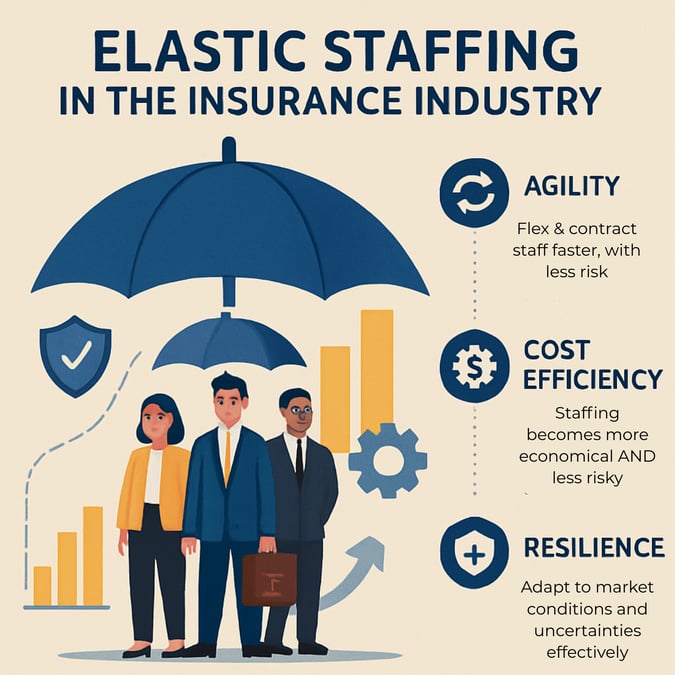 Forward-thinking insurers are adopting what industry experts call "Elastic Staffing" – a structural approach that combines three interdependent components:
This model differs fundamentally from traditional outsourcing. Vendor partners assume accountability for outcomes rather than simply providing transactional labor. The relationship becomes one of co-managed work with shared responsibility for results, quality, and customer experience.
Elastic Staffing offers several compelling advantages for carriers navigating today's market challenges:
Transitioning to an Elastic Staffing model requires a thoughtful, strategic approach:
Success with this model depends on intentional cultural alignment. The core team must foster trust and accountability that extends beyond traditional employment boundaries. Leadership must communicate a consistent vision that embraces technology as an enabler rather than a threat and positions vendor partnerships as strategic rather than transactional.
As market volatility becomes the new normal, carriers that reimagine their workforce models will gain significant competitive advantages. The Elastic Staffing approach provides a pragmatic framework for balancing strategic leadership with operational scalability and technological innovation. It represents a fundamental strategic shift that enables insurers to adapt quickly to changing market conditions while maintaining their cultural identity and service quality.
The ability to flex operational capacity without compromising quality or customer experience will become a critical differentiator for successful and effective insurance organizations.

2 min read
The rapid growth of Managing General Agents (MGAs) is currently facing a significant, yet frequently ignored, hurdle: a deficit of seasoned...

3 min read
The insurance industry faces a persistent talent crisis, driven by a significant gap between available skilled professionals and industry needs,...
4 min read
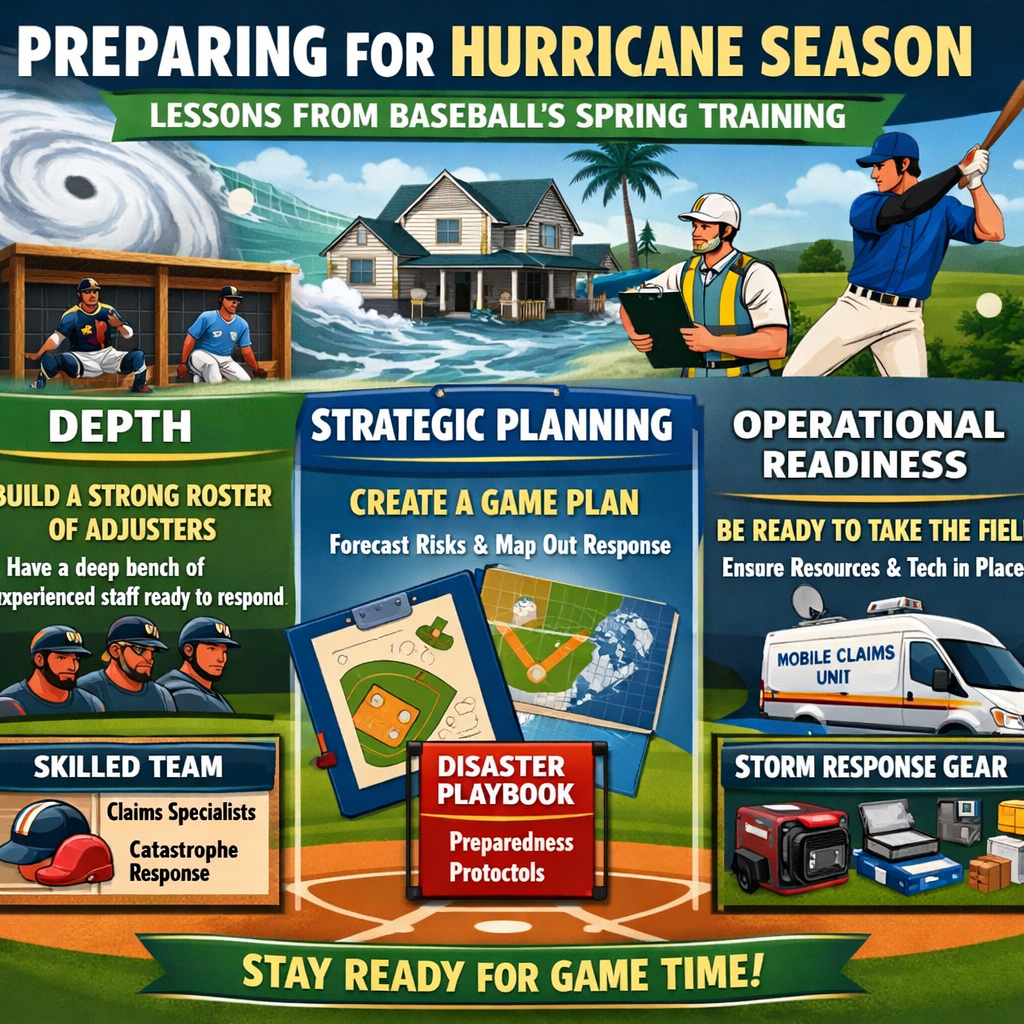
This guest article first appeared in Demotech Difference HERE No team wins a season with nine players. They win with depth. Every February, Major...